
Quick answer: A handyman installing a cat flap measures your cat, picks the right size and placement, cuts a clean opening in the door, and fits and seals the flap so it doesn’t let in drafts, water, or anything you didn’t invite in. Most jobs take under an hour and run $150 to $500 depending on the door and flap type. Hollow-core interior doors need a backer frame, exterior doors need proper weatherproofing, and both are easy to get wrong on a first DIY attempt.
Ever watched your cat sit at a closed door, staring at it like it personally did something wrong? A cat flap fixes that fast. What most homeowners don’t know is what actually happens when a handyman installs a new cat flap in a door, what it should cost, or whether their specific door is even a good candidate for one. Here’s the real answer, plus what to know before you book anyone for the job.
What a Handyman Actually Does When Installing a Cat Flap
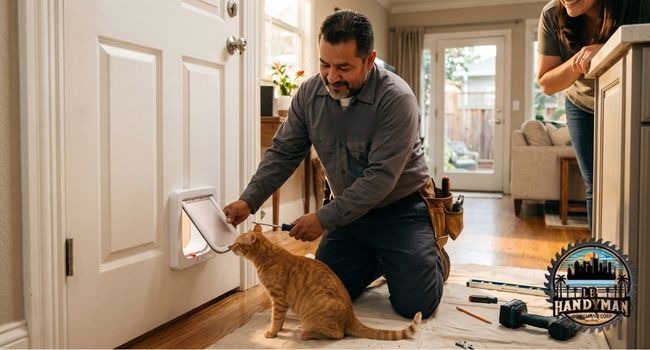
It looks simple from the outside: cut a hole, screw in a flap, done. The actual job has a few more steps than that, and skipping any of them is where most DIY attempts go sideways.
- Measure your cat, not the door. The flap gets centered at roughly cat-belly height, about 10 to 15 centimeters (4 to 6 inches) off the ground for most cats. If you have more than one cat, the smallest one sets the height.
- Check the door material before marking anything. Hollow-core, solid wood, uPVC, glass, and metal all cut differently, and a couple of them need extra prep before the first hole gets drilled.
- Mark and cut cleanly. The flap’s template gets centered and traced, corners get drilled first so a jigsaw has somewhere to start, and the opening gets cut and sanded so there’s nothing sharp on either side.
- Fit, seal, and test. The frame goes in from both sides and gets screwed together, any gap around the edge gets sealed so you’re not paying to heat or cool the outdoors, and the flap gets tested for a clean, unobstructed swing before anyone calls it done.
Before the Handyman Arrives: What to Decide First
A couple of decisions up front make the actual visit faster and the result better.
- Size. Standard cat flaps fit most cats, but a bigger cat, or a household that wants to let a small dog use the same opening, may need something closer to a dog door for cats sized flap instead. Measure your cat’s shoulder width and height before you buy anything.
- Location. Most homeowners put the flap in an exterior door, but interior cat doors (a laundry room, a garage, a spare bedroom you’d rather keep off-limits during the day) are just as common a request.
- Type. Basic manual flaps, lockable flaps, and microchip-reading flaps all install differently. Decide before the appointment so the right hardware shows up with the handyman, not after.
Does Your Door Type Change the Installation?
This is the part most general cat flap guides gloss over, and it’s the single biggest factor in whether a DIY attempt goes well.
- Hollow-core interior doors. Most interior doors in American homes are hollow-core, essentially a thin wood skin over a honeycomb or cardboard interior. Cut a flap opening straight into one without reinforcement, and the screws have nothing solid to bite into, so the flap loosens within weeks. It needs a wood backer frame installed inside the cut, or a self-framing flap built for hollow doors.
- Solid wood doors. The easiest material to work with. It holds screws well on its own and doesn’t need extra framing, though it does take longer to cut cleanly than hollow-core.
- Exterior and uPVC doors. An exterior cat door needs real weatherproofing around the cut edge, not just a snug fit, or you’ll feel a draft every time the wind picks up. Insulated flaps are worth the extra cost on an exterior door in most climates.
- Glass and metal doors. Both are doable, but neither is a good first DIY project. Glass usually means installing the flap into an insert panel rather than cutting the glass itself, and metal doors call for specific blades and a plan for what happens to bare cut metal edges over time.
Manual Flap or Microchip Flap? What to Know Before You Choose
Cat flaps, sometimes listed online as feline doors, break down into two real categories.
- Manual flaps. A simple hinged panel, sometimes with a basic 4-way lock (in, out, both, or neither). Affordable, nothing to program, and the right choice for most single-cat households.
- Microchip or RFID flaps. Battery-powered, and programmed to recognize your cat’s existing microchip or a collar tag so only your cat gets in. They can hold up to 30+ registered chips, which matters if you have several cats or want to keep the neighborhood wildlife, and the occasional wandering visitor, on the outside where they belong.
If keeping anything that isn’t your cat out is a real priority for you, a microchip flap is worth the extra cost. A manual flap opens for any cat-sized animal willing to push through it, which is worth knowing before you install one and find out the hard way.
Cat Door Installation vs. a Full Dog Door: Does Size Matter?
Multi-pet households ask this a lot. If you have a small dog and a cat sharing one door, you don’t necessarily need two openings. A mid-size flap, sized as a dog door for cats and small dogs alike, can cover both, as long as it’s rated for the heavier daily traffic a dog puts on the hinge and lock mechanism. A flap built for occasional cat use tends to wear out fast under a 20-pound dog going through it multiple times a day.
What Does Cat Flap Installation Cost?
Nationally, professional cat door installation runs $150 to $500 for materials and labor, according to HomeGuide’s cost data. Where you land in that range depends on a few things:
- Door material. A standard wood or uPVC door is the cheapest and fastest job. Glass, metal, and exterior walls cost more and take longer.
- Flap type. Basic manual flaps cost less than microchip or electronic versions, both for the hardware itself and the extra setup time.
- Whether you’re replacing the door. Sometimes it’s cheaper and cleaner to install a pre-cut pet door insert in a new door than to modify one you already have, especially if the existing door is damaged or has been cut before.
We quote every job after actually seeing the door, not off a generic price list, so you know the real number before anyone picks up a drill. Request a free quote and we’ll give you a straight answer.
Common Mistakes Homeowners Make Installing a Cat Flap Themselves
- Skipping the backer frame on a hollow-core door. The single most common reason a DIY cat flap comes loose within a month.
- Measuring the door instead of the cat. A flap centered on the door’s height, not the cat’s, is often too high for smaller or older cats to use comfortably.
- No weatherproofing on an exterior install. A cut opening in an exterior door needs a real seal, not just a tight fit, or you’ll notice it on your energy bill.
- Cutting first, measuring twice never. Once the hole is cut, it’s cut. A crooked or oversized opening usually means replacing the door, not just the flap.
Why Long Beach Homeowners Call a Handyman for This
A cat flap looks like a small job, right up until the cut is off by half an inch or the backer frame gets skipped on a hollow-core door. We’ve fixed both. As a local, family-owned handyman serving Long Beach, we measure your cat and your door before we touch either one, and every cut, seal, and fit gets done right the first time, no redoing it in a month once the flap works loose.
If you’re also dealing with a door that’s damaged, drafty, or due for a full swap, take a look at our door repair services in Long Beach while you’re at it. Ready to get started? Request a free quote, or call 562-235-9534.
FAQ
How much does it cost to install a cat flap?
Professional cat flap installation typically costs $150 to $500 for materials and labor, depending on your door material, the flap type you choose, and whether the door needs any extra prep work first.
Can a cat flap be installed in a hollow-core door?
Yes, but it needs a wood backer frame or a self-framing flap built for hollow doors. Cutting straight into a hollow-core door without reinforcement means the screws have nothing solid to hold onto, and the flap will loosen over time.
Do I need a professional, or can I install a cat flap myself?
Solid wood doors are a reasonable DIY project if you’re comfortable with a jigsaw and take your time measuring. Hollow-core doors, exterior doors that need weatherproofing, and glass or metal doors are where hiring a handyman saves you from a redo.
What’s the difference between a manual and a microchip cat flap?
A manual flap is a simple hinged panel, sometimes with a basic lock, that opens for any cat-sized animal that pushes on it. A microchip flap reads your cat’s existing microchip and only opens for pets you’ve registered to it, which matters if keeping other animals out is a priority.