Quick answer: Hardwood flooring lasts longer and adds more resale value than almost any other flooring option, solid hardwood can last 30 to 100+ years with refinishing, but it costs more upfront ($11 to $25 per square foot installed) and needs real care around moisture, scratches, and noise. Engineered wood offers a similar look for less ($9 to $20 per square foot) and handles humidity better, at the cost of a shorter lifespan. Whether it’s the right call comes down to your budget, your household, and how long you plan to stay in the home.
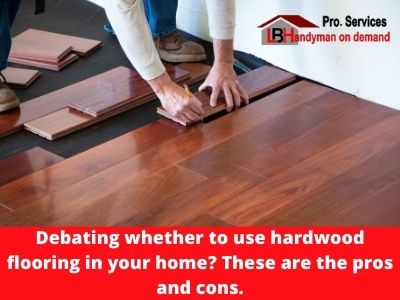
Debating whether to use hardwood flooring in your home? You’re weighing a real tradeoff: hardwood looks and lasts better than almost anything else you could put down, but it costs more and asks more of you in return. Here are the actual hardwood flooring pros and cons that matter when you’re deciding, including numbers the average flooring guide skips.
Solid Hardwood vs. Engineered Wood: What’s the Real Difference
Before pros and cons, it helps to know these are two different products, not one:
- Solid hardwood is a single piece of wood, top to bottom, usually about 3/4 inch thick. It’s nailed down, and it can be sanded and refinished many times over its life.
- Engineered wood has a real hardwood veneer on top, bonded over several layers of plywood pressed in a crisscross pattern underneath. It can be nailed, glued, or floated with click-lock edges, and it handles humidity and temperature swings better than solid wood because the layered core resists expanding and contracting.
The tradeoff: engineered wood’s thinner top layer usually only tolerates one or two refinishes before it’s done, where solid hardwood can be refinished many times over decades.
The Pros of Hardwood Flooring
- It lasts. Solid hardwood can last 30 to 100+ years with proper care and periodic refinishing. Few other flooring materials come close.
- It adds real resale value. Hardwood is one of the few upgrades that consistently shows up as a plus in home appraisals and buyer walkthroughs.
- It’s easier on allergies. Unlike carpet, hardwood doesn’t trap dust, pet dander, or other allergens in fibers.
- It looks and feels like real wood, because it is. Real wood flooring has natural grain variation and depth that faux finishes still don’t fully replicate, no two boards look exactly alike.
- It’s low-maintenance day to day. Regular sweeping and the occasional damp mop keeps it looking good between refinishes.
The Cons of Hardwood Flooring
- The upfront cost is real. Solid hardwood runs $11 to $25 per square foot installed, more than most other flooring options.
- Water is the enemy. Spills, humidity, and moisture can warp or cup solid hardwood over time. It’s generally not recommended below grade or in bathrooms.
- It scratches. Pets, furniture legs, and high heels all leave marks, especially on higher-gloss finishes.
- It can be noisy. Hardwood carries footsteps more than carpet does, and boards can develop a squeak over time.
- Refinishing is a real project. Every decade or so, expect to clear the room and live with the dust and noise of a professional refinish.
How Much Does Hardwood Flooring Cost?
Here’s what the real numbers look like for hardwood flooring cost per square foot, installed:
- Solid hardwood: $11 to $25 per square foot.
- Engineered wood: $9 to $20 per square foot.
- By species: red oak runs $3 to $6 per square foot in materials alone, white oak $5 to $10, maple $4 to $8, and exotic species anywhere from $8 to $25.
Nationally, the average total project lands around $4,700, with most homeowners spending somewhere between $2,500 and $7,000 depending on room size, wood species, and subfloor condition, according to Angi’s cost data. Get an actual quote before you budget off any of these ranges, your specific home is what determines the real number.
Hardwood vs. Laminate: Which Should You Choose?
If you’re comparing laminate vs hardwood because of the price gap, here’s the honest tradeoff: laminate costs less upfront and resists moisture and scratches better, but it’s a printed image of wood under a protective layer, not real wood. It can’t be refinished, and once it’s damaged or dated, it gets replaced, not restored. Hardwood costs more, but it’s the one flooring type you can sand back to new instead of tearing out. If you’re planning to stay in the home long-term, hardwood usually wins that math. If you’re flipping a rental or working with a tight budget, laminate is a reasonable trade.
How Long Does Hardwood Flooring Last?
Solid hardwood typically lasts 30 to 100+ years, with refinishing roughly every 10 to 20 years to keep it looking new. Engineered wood generally lasts 20 to 30 years, or up to 40 with a thicker wear layer and careful upkeep. Wood species, finish, foot traffic, and how well moisture is managed all move that number up or down.
Is Hardwood Flooring Right for Your Home?
A few honest questions to ask before you commit:
- How long are you staying? Hardwood’s cost pays off over time. If you’re moving in a couple years, the upfront cost is harder to justify.
- Kids, pets, or both? Hardwood can handle normal family life, but expect more scratches and more frequent refinishing than a low-traffic room would need.
- What’s your actual budget? Factor in the floor itself, removal of the old flooring, underlayment, and installation, not just the per-square-foot material price.
- Where’s it going? Solid hardwood isn’t a good fit for bathrooms, basements, or anywhere moisture is a regular factor. Engineered wood is more forgiving there.
What a Handyman Can Help With vs. When to Call a Flooring Specialist
Not every part of a hardwood project is the same size job.
- Handyman-scope work: spot repairs, replacing a damaged board or two, fixing squeaks, re-securing loose boards, and general maintenance and cleaning advice.
- Flooring-specialist territory: a full room or whole-home installation, sanding and refinishing an entire floor, and subfloor repair before new flooring goes down.
We’ll tell you honestly which category your project falls into instead of guessing. Sometimes the fix really is a quick repair, not a full replacement.
Why Long Beach Homeowners Call Us
We’ve installed and repaired hardwood flooring for Long Beach homeowners for 20+ years, done right the first time, and cleaned up after every job. If you’re not sure whether your floor needs a repair or a full refinish, request a free quote and we’ll give you a straight answer, or call 562-235-9534. See our full handyman services in Long Beach, and check our reviews from homeowners we’ve helped.
FAQ
What’s the difference between solid and engineered hardwood?
Solid hardwood is one piece of wood all the way through and can be refinished many times over decades. Engineered wood has a real wood top layer over a plywood core, handles humidity better, but usually only tolerates one or two refinishes before it’s done.
How much does hardwood flooring cost per square foot?
Solid hardwood runs $11 to $25 per square foot installed, and engineered wood runs $9 to $20 per square foot installed. The exact number depends on wood species, plank width, and your home’s specific installation needs.
Is laminate or hardwood better?
Laminate costs less and resists moisture and scratches better, but it can’t be refinished and gets replaced once it’s worn out. Hardwood costs more upfront but can be sanded and restored instead of torn out, which usually wins out for homeowners planning to stay long-term.
How long does hardwood flooring last?
Solid hardwood typically lasts 30 to 100+ years with periodic refinishing. Engineered wood generally lasts 20 to 30 years, depending on the thickness of its wear layer and how well it’s maintained.