
Quick answer: Yes, a handyman can legally do electrical work in California, but only within real limits. Under the state’s handyperson exemption, unlicensed work is allowed if the total job (labor and materials combined) stays under $1,000, doesn’t require a permit, and doesn’t involve hiring outside workers. That covers most light fixture swaps, switch and outlet replacements, and dimmer installs on existing circuits. New circuits, panel work, and anything a permit is required for needs a licensed electrician, no exceptions.
Can a handyman do electrical work, or does every flickering switch and dead outlet need a licensed electrician? It’s one of the most common questions we get, and the honest answer is more nuanced than a flat yes or no. California actually spells this out pretty clearly, and knowing where the line sits saves you money on the small stuff and keeps you out of trouble on the stuff that isn’t.
The Short Answer: Yes, But Only Within Limits
California’s Contractors State License Board (CSLB) allows unlicensed handyman work, including some electrical work, under what’s called the handyperson exemption. As of January 1, 2025, that exemption covers projects up to $1,000 in total labor and materials, up from the old $500 limit, under Assembly Bill 2622. Three conditions all have to be true at once:
- The total job, materials and labor combined, is $1,000 or less.
- The work doesn’t require a building permit.
- The person doing the work isn’t hiring anyone else to help.
Miss any one of those three, and the exemption doesn’t apply, regardless of how small the job feels. A lot of the confusion we run into comes from homeowners (and a few outdated blog posts) still quoting the old $500 number. It’s $1,000 now.
What Electrical Work a Handyman Can Legally Do
In practice, this covers most of the small electrical jobs that come up around a house, as long as no permit is triggered:
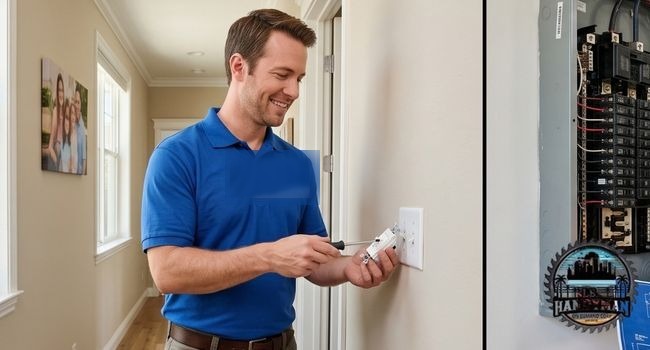
- Light fixture installation. Swapping an old fixture for a new one on an existing electrical box and circuit, no new wiring involved.
- Electrical outlet installation and replacement. Like-for-like outlet swaps, including upgrading a standard outlet to a GFCI outlet in the same location on an existing circuit.
- Wiring an outlet or switch back up correctly. Reconnecting existing wiring to a new device, not running new wire to a new location.
- Switch and dimmer installs. Replacing a standard switch with a dimmer, on an existing circuit, existing box.
- Ceiling fan installation, where the fixture is going into a box already rated and wired for it.
Notice the pattern: it’s replacement and like-for-like work, not new electrical capacity. That’s the real dividing line, more than the dollar amount.
What Requires a Licensed Electrician Instead
The moment a job needs a permit, the $1,000 exemption stops applying entirely, even if the invoice comes in under that number. In California, that generally includes:
- New circuits or new outlet locations that didn’t exist before.
- Electrical panel work, upgrades, or subpanel installs.
- Whole-room or whole-house rewiring.
- EV charger installation.
- Anything involving GFCI or AFCI protection being added to a circuit that didn’t have it, common in kitchen, bathroom, and outdoor remodels.
- Troubleshooting an actual electrical problem, like breakers tripping, warm outlets, or flickering that isn’t just a bad bulb. That’s a licensed electrician’s job, not a guess-and-check one.
This is the same electrician-required category, by the way, that applies to general contractors without a C-10 electrical specialty license too. Size of the business doesn’t change the rule.
Why the $1,000 Rule Trips People Up
Most homeowners assume the dollar amount is the whole rule. It isn’t. The permit condition matters just as much, and it’s the one people miss. A $200 job that requires a permit still needs a licensed contractor. A $900 job that doesn’t need a permit is fine. The price tag alone doesn’t tell you which category you’re in, which is exactly why it’s worth asking directly before work starts, instead of assuming a small-sounding job is automatically fair game.
What Happens If You Hire Outside the Exemption Anyway
Beyond it simply being against the law, unlicensed electrical work outside the exemption creates real, practical problems down the line:
- Insurance can deny a claim. If unpermitted electrical work is found to have caused a fire or damage, your homeowner’s insurance has grounds to refuse the claim.
- Resale headaches. Unpermitted electrical work turns up in home inspections and can hold up a sale or an appraisal.
- No real recourse if it’s wrong. A licensed electrician’s work is backed by their license and insurance. An unlicensed job outside the exemption isn’t backed by much of anything if something fails later.
How to Tell Which One You Need
A quick way to sort it before you even call anyone:
- Is it a straight swap on existing wiring? Fixture, switch, or outlet, same spot, same circuit. Handyman territory.
- Does it add anything new? New outlet location, new circuit, a panel change. Licensed electrician, no exceptions.
- Is something actually malfunctioning? Tripping breakers, warm switches, burning smell. Electrician, and don’t wait on it.
- Still not sure? Ask whoever you’re calling directly whether the job needs a permit. A straight answer to that one question tells you which category you’re in.
Why Long Beach Homeowners Call Us First
We’ll do the light fixture, the outlet swap, the switch that needs replacing, done right the first time and within what the law actually allows. And when a job crosses into permit territory, licensed-electrician territory, we’ll tell you that up front instead of taking the job anyway. That’s not us turning down work, it’s us being straight with you, which is the whole reason people call a local, family-owned handyman in Long Beach instead of guessing on their own. It’s also just one part of our full range of handyman services.
Not sure which category your project falls into? Request a free quote and tell us what’s going on, or call 562-235-9534. We’ll give you a straight answer either way.
FAQ
Can a handyman legally do electrical work in California?
Yes, within limits. Under the CSLB’s handyperson exemption, unlicensed electrical work is allowed if the total job is $1,000 or less, doesn’t require a permit, and doesn’t involve hiring outside workers. That covers most fixture, switch, and outlet replacement work on existing circuits.
Can a handyman install a light fixture?
Yes, as long as it’s going onto an existing electrical box and circuit that’s already rated for it. Running new wiring to a new location for the fixture would require a licensed electrician instead.
Can a handyman install or replace an electrical outlet?
Yes, for like-for-like replacements on an existing circuit, including upgrading to a GFCI outlet in the same spot. If you’re looking up how to replace electrical outlet hardware yourself, the same existing-circuit rule applies to DIY as it does to a handyman. Adding a brand new outlet location is a different category and needs a permit and a licensed electrician.
What electrical work always needs a licensed electrician?
New circuits, panel upgrades or subpanels, whole-house rewiring, EV charger installs, adding GFCI/AFCI protection where it didn’t exist before, and troubleshooting an actual electrical problem like tripping breakers or warm outlets.